
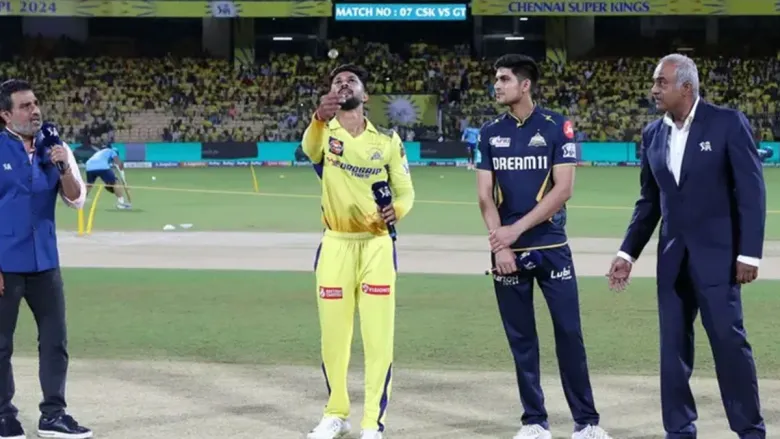
The IPL toss isn’t just a pre match formality. It’s a crucial moment that can swing the entire match in one team’s favour. Smart cricket analysts know that understanding toss dynamics gives you a serious edge when predicting match outcomes.
In this guide, we’ll dive deep into the data behind IPL tosses, break down venue specific patterns, and show you exactly how to factor the toss into your match predictions for the 2026 season.
What Percentage Of IPL Matches Are Won By The Toss Winner?
Let’s start with the numbers that matter.
Across all IPL seasons from 2008 to 2025, teams winning the toss have gone on to win approximately 52% of their matches. On the surface, that’s only slightly better than a coin flip. But dig deeper, and the patterns become far more useful.
In regular league matches, the toss advantage is modest. Teams can afford to lose the toss and still back themselves to win. But the moment you enter knockout territory, everything changes.
In IPL playoffs and finals, teams winning the toss have won nearly 65% of matches. Out of 16 finals before 2024, toss winners lifted the trophy 10 times. That’s a conversion rate serious analysts cannot ignore.
The takeaway? During league stages, the toss is one factor among many. In knockout matches, it becomes a significant predictor of the final result.
The Toss Factor In IPL: How To Predict Winners At The Flip?
Smart prediction work accounts for multiple weather variables.
Humidity levels: High humidity (above 70%) typically means heavier dew. It also affects ball swing in the early overs, potentially benefiting teams bowling first if they have quality swing bowlers.
Wind patterns: Strong winds at venues like Dharamsala or Mohali can assist bowlers throughout the match, making batting first slightly more attractive. Wind also affects dew formation.
Temperature drops: A sharp temperature drop between innings indicates heavy dew is incoming. Check weather forecasts for temperature variations during match hours.
Rain predictions: If rain is expected, teams often prefer chasing due to DLS method calculations, which historically favour the team batting second in shortened matches.
Build these variables into your pre match analysis for more accurate outcome predictions.
Why Do 80% Of IPL Captains Choose To Bowl First?
Between 2017 and 2019, IPL captains elected to field first a remarkable 83% of the time after winning the toss. Even in recent seasons, bowling first remains the dominant choice at most venues.
Known target psychology: Chasing teams know exactly what they need. There’s no second guessing required. Batters can pace their innings, calculate required run rates, and take risks at the right moments.
Dew advantage in evening matches: This is the game changer. Moisture settles on the outfield during the second innings of night matches. The ball becomes slippery, the grip disappears, and bowlers struggle to execute their plans. Meanwhile, batting becomes significantly easier.
Consistent pitch behaviour: Unlike longer formats, where pitches deteriorate, T20 surfaces remain largely unchanged. There’s no advantage to batting first before the pitch breaks up because it simply doesn’t break up in three hours.
When you see a captain choose to bat first in modern IPL cricket, it usually signals specific conditions or a deliberate tactical approach worth noting.
Which IPL Venues Have The Highest Chase Success Rate?
Venue analysis is where serious prediction work separates from casual observation. Different grounds produce dramatically different outcomes based on toss decisions.
Wankhede Stadium, Mumbai: Chase success rate: Over 70%. This is the ultimate chasing venue in IPL cricket. The outfield is rapid, boundaries are relatively short, and dew makes second innings bowling extremely difficult. Teams winning the toss here will bowl first almost without exception.
M. Chinnaswamy Stadium, Bangalore: Chase success rate: 65%+ Another high scoring venue where batting second provides a clear advantage. The small boundaries and flat pitch mean totals of 180+ are frequently chased down.
Narendra Modi Stadium, Ahmedabad: Chase success rate: 57% (20 wins from 35 completed matches). Despite being a newer IPL venue, clear patterns have emerged. Teams batting second have a noticeable edge, and captains consistently prefer to bowl first.
Ekana Stadium, Lucknow: Chase success rate: 55%. Toss winners have won 63% of completed matches here. The pitch assists spinners initially, but dew in the second innings tilts the balance towards chasing sides.
Which IPL Grounds Favour Teams Batting First?
Not every venue suits the chasing team. Some grounds reward setting a target and defending it.
MA Chidambaram Stadium, Chennai: Bat first success rate: 55%+ The Chepauk surface is slower than most IPL venues. It grips and turns as the match progresses, making second innings batting trickier. Chennai Super Kings have built their entire home strategy around batting first and unleashing their spinners.
Eden Gardens, Kolkata: Bat first success rate: 52% Traditionally, a surface where setting a target has produced results. The pitch can slow down in the second innings, and KKR have historically performed well when defending.
Rajiv Gandhi Stadium, Hyderabad: Bat first success rate: 55%+ The ball comes onto the bat beautifully in the first innings, but tends to grip more as the match progresses. Teams winning the toss here often consider batting first, especially in afternoon starts.
When building your match predictions, always cross reference the venue’s historical data with the toss outcome.
How Does Dew Impact IPL Match Results?
Dew is the single most important environmental factor in IPL cricket. Understanding its impact is essential for accurate predictions.
During evening matches, as temperatures drop after sunset, moisture forms on the grass. This affects the game in several ways:
Bowling becomes harder: The wet ball is difficult to grip. Seamers can’t hit their lengths consistently, and spinners lose their ability to turn the ball. Death bowling, which relies on precise execution, becomes a lottery.
Batting becomes easier: The ball skids through faster, comes onto the bat nicely, and boundaries flow more freely. Even average batters can look like world beaters when the dew is heavy.
Fielding suffers: Wet conditions make the ball slippery for fielders, too. Dropped catches and misfields increase in the second innings.
Matches after 7:30 PM local time: typically see heavier dew. Venues near water bodies or in humid regions experience more dew than drier locations.
For prediction purposes, always check the weather forecast for humidity levels and expected dew. A match with a heavy dew forecast at Wankhede is almost certainly going to favour the chasing team.
What’s The Toss Win Match Win Correlation In IPL Playoffs?
This is where toss data becomes seriously valuable.
In high stakes knockout matches, the toss advantage amplifies significantly:
| Match Type | Toss Winner Success Rate |
|---|---|
| League Matches | 52% |
| Eliminators | 58% |
| Qualifiers | 62% |
| Finals | 62.5% |
Why does this happen?
Pressure magnifies small advantages. The mental weight of a knockout chase affects even experienced batters. Knowing you must score a certain total or go home creates errors that don’t happen in league games.
Captains make optimal decisions. In league matches, teams sometimes experiment or rest players. In knockouts, every decision is calculated for maximum advantage.
Margins are tighter. Knockout matches tend to be closer contests. When margins are small, the toss advantage becomes proportionally larger.
If you’re analysing a playoff match, the toss outcome deserves significantly more weight in your prediction model.
How Do Different IPL Teams Perform Based On Toss Results?
Team specific data reveals fascinating patterns that inform smarter predictions.
Mumbai Indians: Toss win match win rate: 55%. More importantly, MI’s toss loss match win rate is just 18.8% in knockout matches. This team historically struggles when forced to bat first in high pressure games. However, they’re exceptional when winning the toss and choosing to chase.
Chennai Super Kings: Toss win match win rate: 54%. CSK are the outliers. They’ve built a squad specifically designed to bat first and defend totals. Their spinners thrive on dry Chepauk surfaces. A CSK toss win at home often means they’ll bat first, against the league wide trend.
Royal Challengers Bangalore: Toss win match win rate: 48% Historically, RCB have struggled to capitalise on toss wins. Their toss loss match win rate in knockouts was among the lowest until their 2025 title run. However, the 2025 squad showed improved adaptability.
Kolkata Knight Riders: Toss win match win rate: 53% KKR performs consistently regardless of toss outcome, suggesting a well balanced squad that adapts to both scenarios.
When predicting match outcomes, factor in how each specific team performs in bat first versus chase situations.
What Time Of Day Affects IPL Toss Decisions Most?
Match timing significantly influences toss strategy and outcomes.
Afternoon matches (3:30 PM start): Dew is minimal or non existent. Batting first becomes more viable because conditions remain consistent throughout. These matches see a higher percentage of captains choosing to bat first after winning the toss.
Evening matches (7:30 PM start): Heavy dew is expected in the second innings. Bowling first becomes the default choice at most venues. Chase success rates increase dramatically in evening games.
Double header days: The afternoon match often produces different patterns than the evening game at the same venue. Analysts should treat these as separate data sets rather than combining them.
For 2026 predictions, always note the match start time before finalising your analysis.
Which IPL Captains Make The Best Toss Decisions?
Captain decision making varies significantly, and tracking these patterns helps predict post toss choices.
MS Dhoni (CSK): Historically prefers batting first at home venues. Makes calculated decisions based on pitch reading rather than following trends. His toss decisions at Chepauk have a higher match win conversion than the league average.
Rohit Sharma (MI): Strong preference for chasing. The Mumbai Indians under Rohit have one of the highest chase success rates in IPL history. If Rohit wins the toss at a neutral venue, expect him to bowl first.
Shreyas Iyer (PBKS, formerly KKR/DC): Holds the record for most IPL tosses won (36). Adaptable decision maker who reads conditions well. His teams have performed consistently regardless of the toss decision.
Hardik Pandya (GT): Aggressive approach with a preference for bowling first. Gujarat Titans under Hardik have shown strong chasing ability, making his toss wins valuable.
Knowing the captain’s tendencies helps you predict the match situation before a ball is bowled.
How Should You Factor The Toss Into IPL Match Betting?
Here’s a practical framework for incorporating toss data into your analysis:
Check the venue: What’s the historical bat first versus chase success rate? Is this a Wankhede (chase) or a Chepauk (bat first)?
Note the match timing: Evening match? Expect bowling first to be the choice. Afternoon match? Batting first becomes more viable.
Check weather conditions: Humidity, dew forecast, and temperature drops all affect the optimal strategy.
Consider match context: League match or knockout? The toss advantage increases significantly in high stakes games.
Factor in team strengths: Does this team chase well? Do they have the bowling to defend? How does the captain typically decide?
Weight appropriately: In league matches, give the toss 10 to 15% weight in your prediction. In knockouts, increase this to 20 to 25%.
How Will The Toss Factor Affect IPL 2026?
Several developments could affect toss dynamics in the upcoming season:
New venues: Any new grounds added to the IPL circuit will need fresh analysis. Early season data becomes crucial for establishing patterns.
Rule changes: The ICC and BCCI occasionally discuss toss alternatives. Any changes would fundamentally alter prediction models.
Squad compositions: Teams that strengthened their bowling depth may become more willing to defend totals. Watch the auction results and team compositions closely.
Pitch preparation trends: Curators may prepare different surfaces based on broadcaster or franchise preferences. Early season pitch behaviour sets the tone.
Stay updated with pre season developments to refine your 2026 prediction approach.
Conclusion:
The IPL toss is far more than a coin flip. It’s a data rich moment that significantly influences match outcomes, especially in knockout cricket.
By understanding venue tendencies, dew impact, captain preferences, and team specific patterns, you can make considerably more informed predictions about match results. The teams winning the toss won’t always win the match, but they start with a measurable advantage that compounds under pressure.
For the 2026 season, build toss analysis into your prediction framework from day one. Track early season patterns, note any shifts from historical data, and adjust your models accordingly.
The analysts who take the toss seriously consistently outperform those who treat it as random noise. Now you have the data to join them.
FAQs:
Overall, toss winners have won approximately 52% of IPL matches since 2008. However, this rises to around 65% in knockout matches, making the toss significantly more predictive in high stakes games.
Wankhede Stadium in Mumbai has the highest chase success rate at over 70%. Heavy dew and a fast outfield make defending totals extremely difficult at this venue.
No. The toss is a genuine 50 50 random event. However, you can predict with high accuracy what decision the captain will make after winning, based on venue, conditions, and historical preferences.
Dew makes the ball wet and slippery, reducing grip for bowlers. This makes spin less effective and seam bowling harder to control. Batting becomes easier as the ball skids through faster, heavily favouring the chasing team.
Three main reasons: the psychological advantage of chasing a known target, the dew factor that makes second innings bowling difficult, and consistent pitch behaviour that doesn’t reward batting first.
Yes, significantly. In IPL finals, toss winners have won 62.5% of matches (10 out of 16 before 2024). The pressure of knockout cricket amplifies the toss advantage considerably.
Mumbai Indians and Chennai Super Kings have historically shown resilience after losing the toss. MI excels at chasing regardless, while CSK’s spin heavy bowling makes them effective defenders even without the toss advantage.
In league matches, weight the toss at 10 to 15% of your prediction model. In knockout matches, increase this to 20 to 25%. Always combine toss data with venue analysis, team form, and head to head records for the best results.
Shreyas Iyer holds the record with 36 toss wins across his captaincy stints with Delhi Capitals, Kolkata Knight Riders, and Punjab Kings.
