
The Indian Premier League is one of the most followed cricket tournaments in the world. Every season brings excitement, surprises, and unexpected results. Fans, analysts, and even experienced followers often try to predict match outcomes. Yet, many predictions turn out to be wrong.
This raises a simple question. Why do people make wrong IPL predictions?
The answer is not just one factor. It is a mix of emotions, incomplete analysis, and unpredictable match conditions. This article breaks it down in a clear and practical way so you can understand where most people go wrong.
Why People Make Wrong IPL Predictions?
Many people believe IPL predictions are all about picking strong teams or star players. That is not enough. Cricket is a dynamic game, and the T20 format adds more uncertainty.
Below are the most common reasons behind wrong predictions.
- Many skip detailed research and rely on quick judgment. Pitch, weather, toss, and team balance are ignored, which leads to weak predictions.
Before understanding the risk of relying on big names, look at this simple comparison:
| Player Type | Assumption | Reality |
| Star Batter | Will score big | Can fail anytime |
| Star Bowler | Will take wickets | Conditions may not suit |
| All Rounder | Will perform both roles | May fail in one role |
- Focusing only on big names ignores team strength and match conditions.
- Past records are not always useful because form changes quickly. Players out of rhythm or coming from injury often struggle.
- Fans support their favorite teams without logic. This leads to ignoring opponent strengths and making biased predictions.
- Assuming every pitch suits batting is a common mistake. Dew, surface type, and weather can change the entire match outcome.
- Toss plays a key role, especially in night matches. Predicting before toss often leads to wrong decisions.
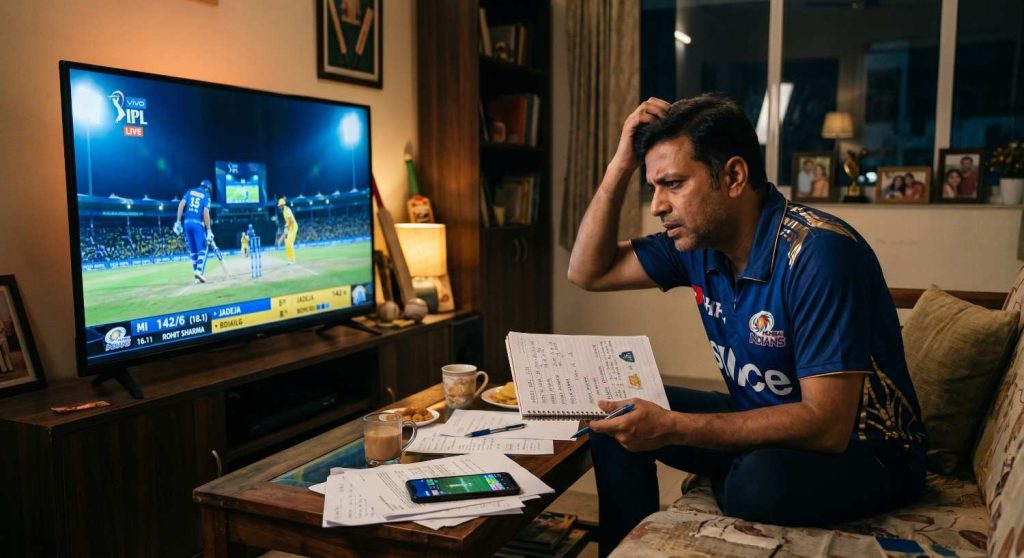
To understand how data improves prediction accuracy, see the table below:
| Factor | Importance | Insight |
| Head to Head | High | Shows team dominance |
| Venue Record | High | Indicates comfort level |
| Player Matchup | Medium | Helps in key battles |
- Without data, predictions become guesswork.
- Teams change lineups based on conditions. Ignoring last minute changes or impact player rule leads to inaccurate predictions.
- Following random tips without checking sources results in poor decisions. Not all information online is reliable.
- Trying to predict every game creates overconfidence and errors. Focused and selective analysis works better.
Here is a quick comparison to understand right and wrong prediction thinking:
| Scenario | Wrong Approach | Right Approach |
| High scoring ground | Pick big hitters only | Check bowling strength too |
| Spin friendly pitch | Ignore spinners | Back spin heavy team |
| Chasing team | Assume an easy win | Check dew and pressure |
These points clearly show that wrong IPL predictions happen due to a lack of analysis, emotional thinking, and ignoring key match factors.
Difference Between Expert And Beginner Predictions:
Understanding the difference between beginner and expert predictions helps in improving accuracy. Many mistakes happen because beginners rely on assumptions, while experts follow a structured and data based approach.
| Factor | Beginner | Expert |
| Analysis | Limited | Detailed |
| Emotion | High | Controlled |
| Data Use | Low | High |
| Consistency | Low | Better |
This comparison clearly shows that experience and discipline play a major role in making better IPL predictions. By reducing emotional bias and focusing more on data and analysis, beginners can gradually improve and move towards expert level thinking.
How To Avoid Wrong IPL Predictions?
Improving prediction accuracy is possible with simple and practical steps. Focus on clarity, data, and timing instead of guesswork.
- Check pitch report, weather conditions, and team news before making any decision. These factors often decide the match direction.
- Stay neutral and avoid supporting teams based on personal liking. Logical thinking always gives better results.
- Look at recent stats, player form, and team performance instead of depending on old records or reputation.
- Wait for the toss result before finalizing your prediction, as it helps in understanding match strategy, especially in night games.
- Always verify information from trusted platforms and avoid random or unverified tips.
These simple steps can reduce mistakes and help in making more accurate IPL predictions over time.
Conclusion:
Wrong IPL predictions are common. Even experts get it wrong at times. The game is fast, unpredictable, and influenced by many factors.
Most mistakes happen due to emotional bias, lack of research, and ignoring match conditions. By focusing on data, staying patient, and analyzing key factors, prediction accuracy can improve. The goal is not to be perfect. The goal is to be more informed and consistent.
FAQs:
IPL predictions fail because of unpredictable match conditions, player form changes, and over reliance on assumptions instead of data.
Yes, but not every time. Using data, pitch analysis, and team news can improve accuracy, but uncertainty always remains.
Yes. Toss can influence the match outcome, especially in night games where dew plays a role.
Pitch report is very important. It helps in understanding whether the match will favor batters or bowlers.
Emotional decisions lead to bias. This reduces objectivity and increases the chances of wrong predictions.
